In a sign of the times, Bangkok is increasingly turning to vertical living options to house residents. Quattro is a high-end residential condominium situated in the upscale area of Bangkok. The proposed site for the structure was an old house with a large garden. On our first visit, we noticed beautiful and mature raintrees (Leguminosae Mimosoideae), and decided that these must be saved. We worked closely with the owners, the architects, and legal consultants in order to preserve the trees, and eventually it was agreed to locate the residential towers away from the existing raintrees. We were able to persuade the developers that this existing greenery was a priceless feature, and should be retained for the benefit of the existing inhabitants (squirrels and birds) but also for the future benefit of the new residents. These trees became the heart of our design, and we worked to create the other garden elements to complement them.
With the trees now as the main feature of the garden design, we set out to create an urban oasis right in the middle of the city. We began studying these fabulous raintrees, and noting all the effects they had on the surrounding area, such as filtering sunlight through their leaves, creating a more comfortable temperature under their canopies.
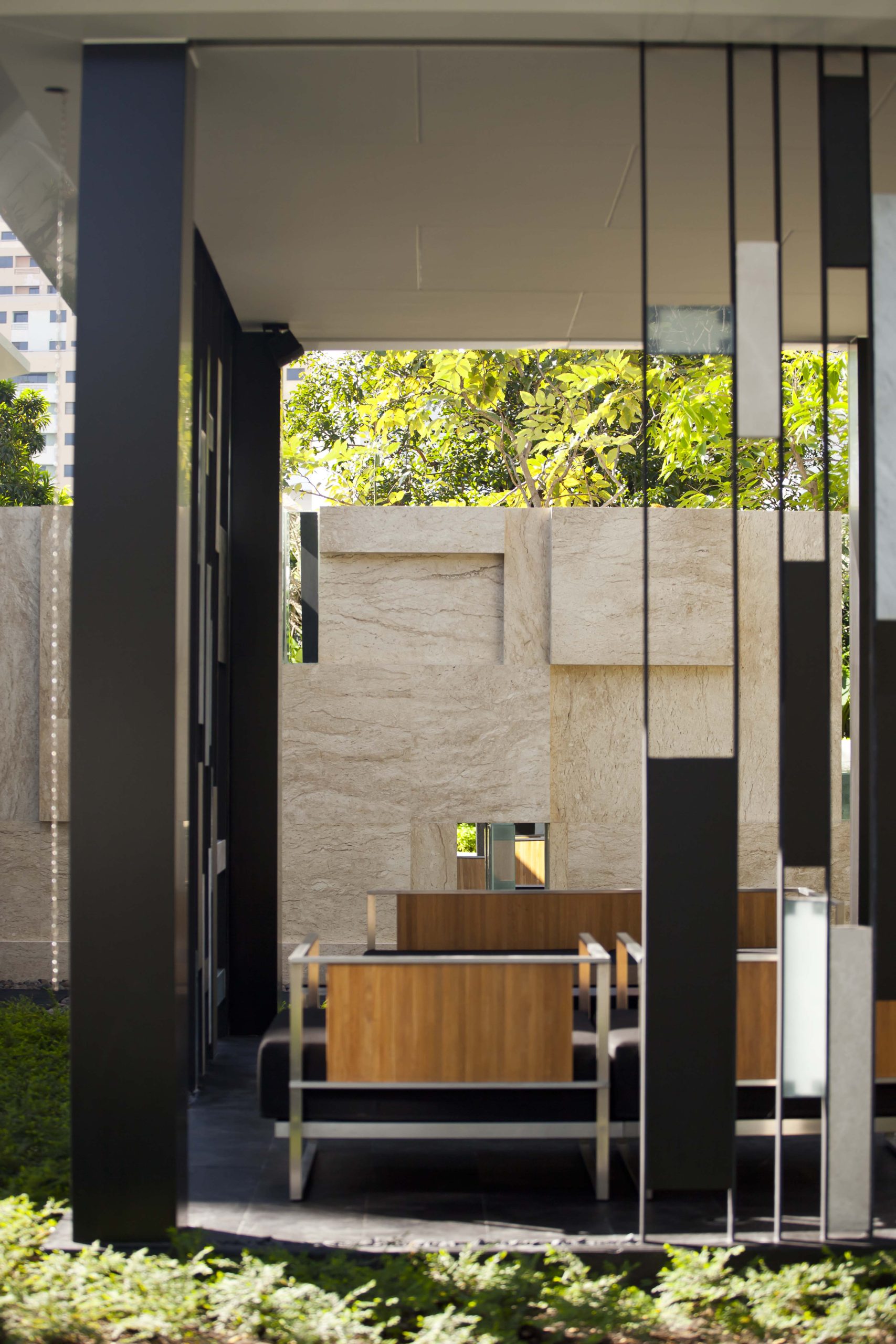
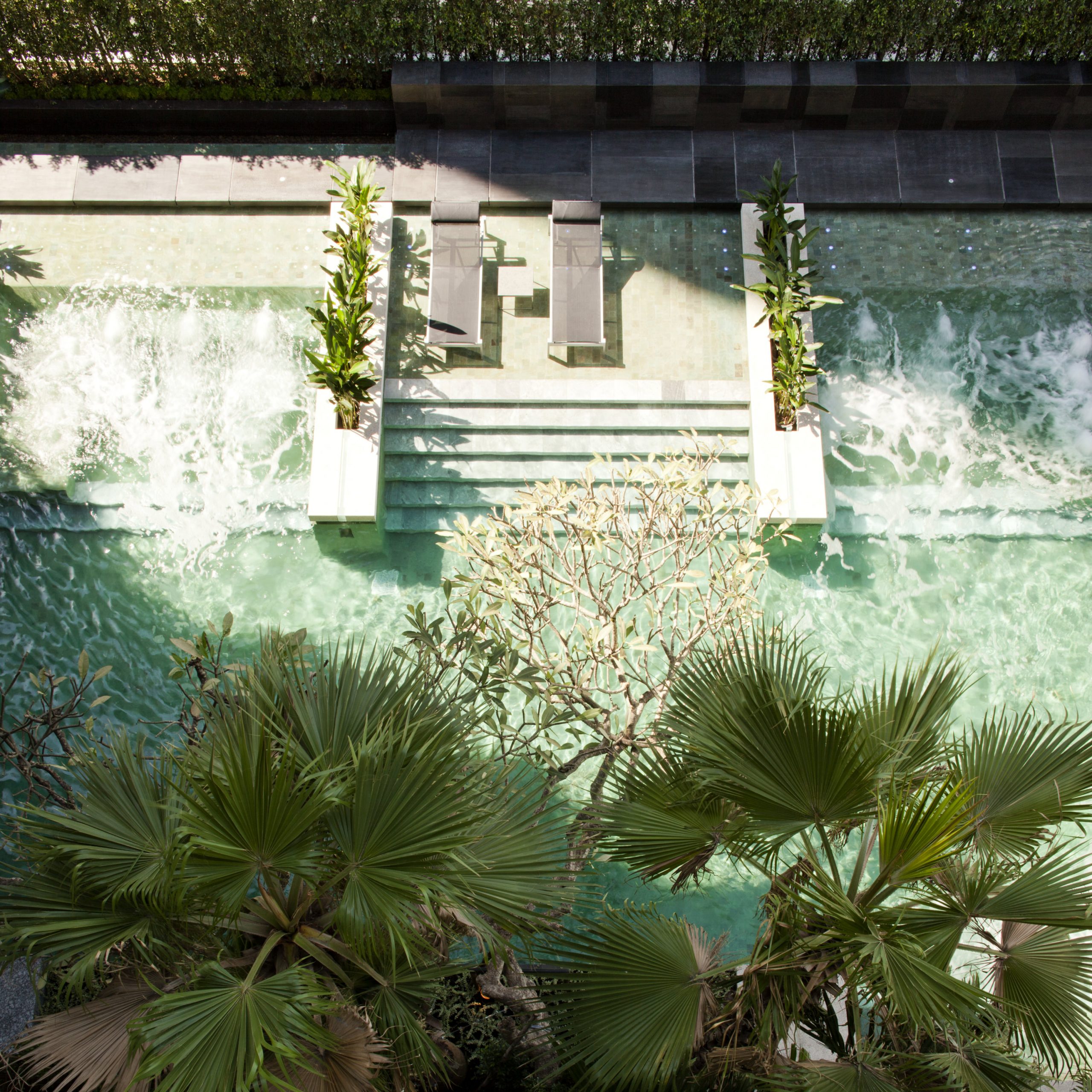
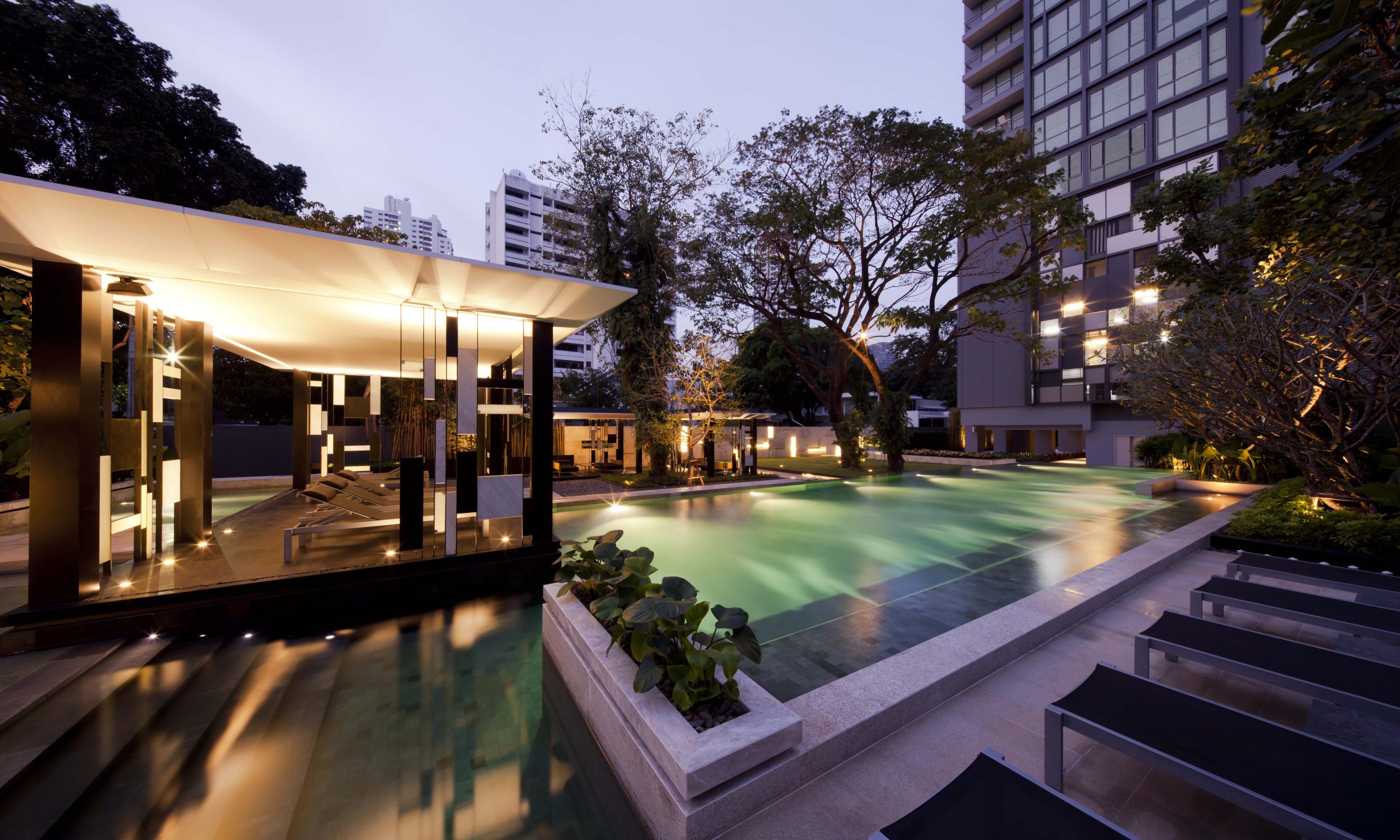
We decided to locate our proposed seating pavilions under their sheltering branches. But in order to minimize any negative impact to their roots, we avoided using hardscape methods and instead implemented a series of terraces, including Mouse tail Plant (Phyllanthus Myrtifolius Moon), and small pebbles in between, creating a microclimate effect. We were also careful to position the main pool away from the root balls. Placed by the boundary wall, and raised at approximately 80cm from the garden, the Infinity Edge and its over-flowing water creates a “White Noise” effect that helps to reduce the outside traffic noises.
Design-wise, we took inspiration from the project’s name, Quattro (4). So we play with a combination of rectangular shapes, combining them into 3-dimensional garden compositions. Some bigger rectangles become terraces, while the smaller ones are used as stepping pathways. A series of rectangular stones is also used on the pavilions’ walls, creating semi-enclosed space for their users.
We want the Main Garden to be a memento of the former garden and the old out-of-town houses. A big open space with nothing in between the ground and the sky, except the raintrees’ huge canopies. A rarity for this kind of project.
In line with the increase of high-rise living, we wanted to accommodate this tendency by creating two small roof gardens. Tower A had a pool terrace on its roof, providing an incentive for residents to live in the tower and also providing insulation to reduce heat for the units underneath. Without much space for a garden, we elected to use two frangipani trees that would extend over the water, and the shade would help reduce the glare that might be reflected into the surrounding units.
Tower B did not require another swimming pool, being so close to the one situated in the Main Garden. So for its roof garden we decided to design a terrace that could be used for multipurpose activities, a Party Terrace. We divided the space into two small hardscape areas, and placed a reflecting pond in between. We used local Bangkok trees, Indian oak (Barringtonia acutangula) and Pong Pong Tree (Cerbera odollam Gaertn.) to create a cool microclimate, allowing the terrace to be used all day, despite the heat.
The residents at Quattro are often living in apartments with three generations of the family in one household. What we wanted to create for these people here is not just any garden but a special place. A place where they can spend the rest of their lives. A place where the elders can have their own comfortable space. A place where children can be raised. A true urban oasis for all three generations.
Project Name: Quattro by Sansiri
Area: 7,200 m2
Completion: 2012
Photography: W Workspace
C O L L A B O R A T I O N
Client: Sansiri Public Company Limited
Architect: Dhevanand Co., Ltd
Interior: DWP
T R O P S T E R D E S I G N
Director: Pok Kobkongsanti
Team: Chonfun Atichat, Anuwit Cheewarattanaporn, Nattapong Raktai, Chatchawan Banjongsiri